
TCLBANKER Banking Trojan Targets Financial Platforms via WhatsApp and Outlook Worms
Threat hunters have flagged a previously undocumented Brazilian banking trojan dubbed TCLBANKER that's capable of targeting 59 banking, fintech, and cryptocurrency platforms.
The activity is being tracked by Elastic Security Labs under the moniker REF3076. The malware family is assessed to be a major update of the Maverick, which is known to leverage a worm called SORVEPOTEL to spread via

Fake Call History Apps Stole Payments From Users After 7.3 Million Play Store Downloads
Cybersecurity researchers have discovered fraudulent apps on the official Google Play Store for Android that falsely claimed to offer access to call histories for any phone number, only to trick users into joining a subscription that provided fake data and incurred financial loss.
The 28 apps have collectively racked up more than 7.3 million downloads, with one of them alone accounting for over

Zara Data Breach: 197,000 Customers Exposed in Third-Party Security Incident
Nearly 200,000 Zara customers were exposed in a third-party breach linked to ShinyHunters, revealing emails, purchase history, and support data. Personal data belonging to nearly 197,000 Zara customers has been compromised following a cyberattack on a former technology provider used by Inditex, the Spanish fashion giant behind some of the world’s most recognized retail brands […]
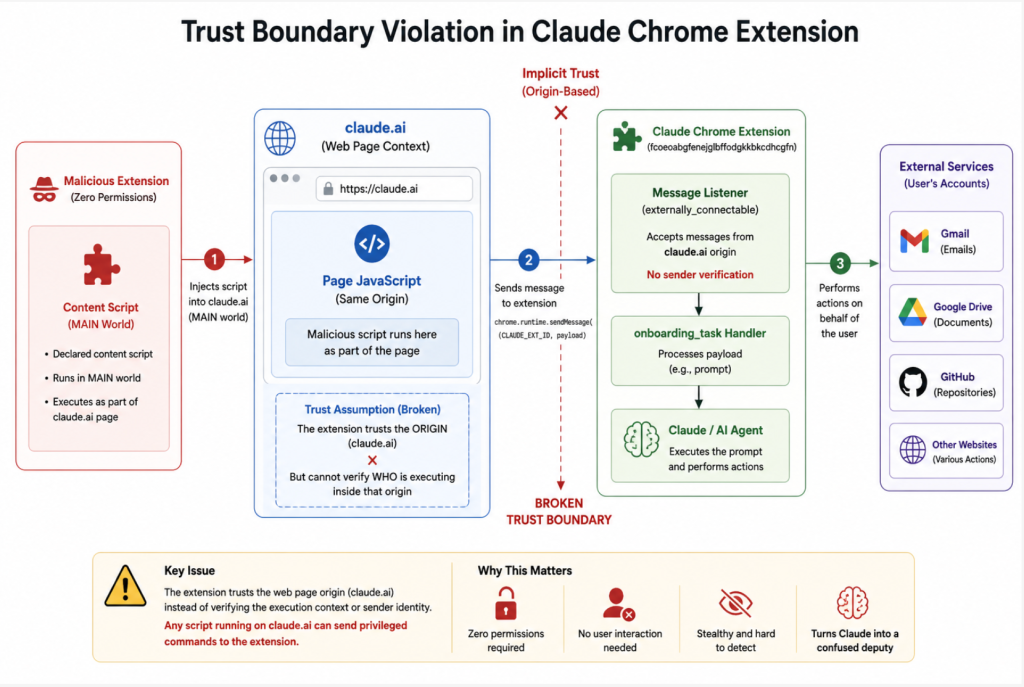
Flaw in Claude’s Chrome extension allowed ‘any’ other plugin to hijack victims’ AI
Agentic AI is more popular than ever, but researchers keep finding trivial ways to hijack LLMs for nefarious purposes.
The post Flaw in Claude’s Chrome extension allowed ‘any’ other plugin to hijack victims’ AI appeared first on CyberScoop.

Dirty Frag: A new Linux privilege escalation vulnerability is already in the wild
Dirty Frag: unpatched Linux kernel flaw grants root access on Ubuntu, RHEL and Fedora. A working exploit is already public. Security researchers have disclosed a new unpatched vulnerability in the Linux kernel, code-named Dirty Frag, that allows an unprivileged local user to gain full root access on most major Linux distributions, including Ubuntu, RHEL, Fedora, […]

Quasar Linux RAT Steals Developer Credentials for Software Supply Chain Compromise
A previously undocumented Linux implant codenamed Quasar Linux RAT (QLNX) is targeting developers' systems to establish a silent foothold as well as facilitate a broad range of post-compromise functionality, such as credential harvesting, keylogging, file manipulation, clipboard monitoring, and network tunneling.
"QLNX targets developers and DevOps credentials across the software supply

CVE-2025-68670: discovering an RCE vulnerability in xrdp
During a security assessment of Kaspersky USB Redirector, we discovered CVE-2025-68670: a pre-auth RCE in the xrdp server component. Project maintainers promptly patched the vulnerability.

Linux Kernel Dirty Frag LPE Exploit Enables Root Access Across Major Distributions
Details have emerged about a new, unpatched local privilege escalation (LPE) vulnerability impacting the Linux kernel.
Dubbed Dirty Frag, it has been described as a successor to Copy Fail (CVE-2026-31431, CVSS score: 7.8), a recently disclosed LPE flaw impacting the Linux kernel that has since come under active exploitation in the wild. The vulnerability was reported to Linux kernel maintainers
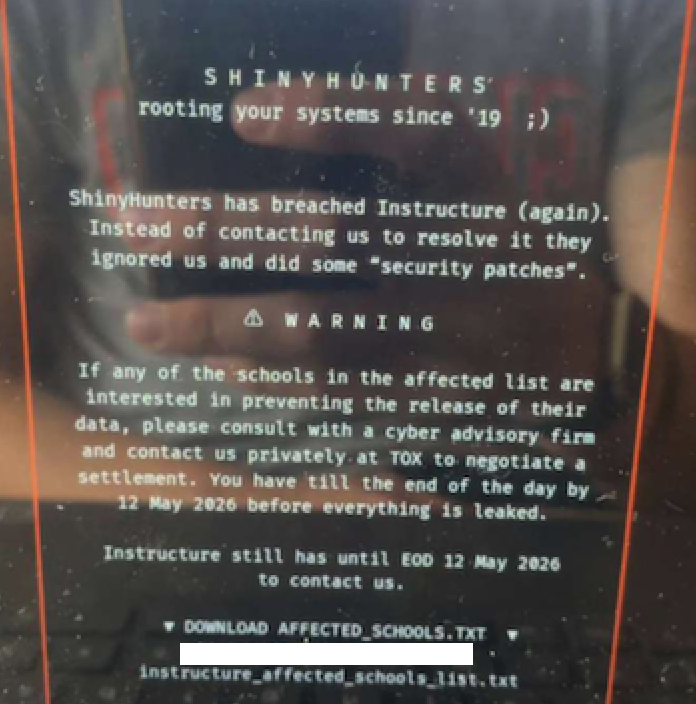
Canvas Breach Disrupts Schools & Colleges Nationwide
An ongoing data extortion attack targeting the widely-used education technology platform Canvas disrupted classes and coursework at school districts and universities across the United States today, after a cybercrime group defaced the service's login page with a ransom demand that threatened to leak data from 275 million students and faculty across nearly 9,000 educational institutions.

A Complete History of Cybersecurity: From Early Viruses to AI-Powered Threats
A comprehensive history of cybersecurity and the eras of threat on the internet.

The Different Types of Payment Fraud and How to Prevent Them
Explore the different types of payment fraud and become aware of telltale signs and how to prevent them.

Digital Citizenship Glossary: Key Terms Every Internet User Should Know
A glossary of key internet terms every user should know to protect themselves from scams, phishing, malware, and other digital threats.

Ivanti EPMM CVE-2026-6973 RCE Under Active Exploitation Grants Admin-Level Access
Ivanti is warning that a new security flaw impacting Endpoint Manager Mobile (EPMM) has been explored in limited attacks in the wild.
The high-severity vulnerability, CVE-2026-6973 (CVSS score: 7.2), is a case of improper input validation affecting EPMM before versions 12.6.1.1, 12.7.0.1, and 12.8.0.1.
It allows "a remotely authenticated user with administrative access to achieve remote code

PCPJack Credential Stealer Exploits 5 CVEs to Spread Worm-Like Across Cloud Systems
Cybersecurity researchers have disclosed details of a new credential theft framework dubbed PCPJack that targets exposed cloud infrastructure and ousts any artifacts linked to TeamPCP from the environments.
"The toolset harvests credentials from cloud, container, developer, productivity, and financial services, then exfiltrates the data through attacker-controlled infrastructure while attempt

One Click, Total Shutdown: The "Patient Zero" Webinar on Killing Stealth Breaches
The hardest part of cybersecurity isn't the technology, it’s the people.
Every major breach you’ve read about lately usually starts the same way: one employee, one clever email, and one "Patient Zero" infection.
In 2026, hackers are using AI to make these "first clicks" nearly impossible to spot. If a single laptop gets compromised on your watch, do you have a plan to stop

PAN-OS RCE Exploit Under Active Use Enabling Root Access and Espionage
Palo Alto Networks has disclosed that threat actors may have attempted to unsuccessfully exploit a recently disclosed critical security flaw as early as April 9, 2026.
The vulnerability in question is CVE-2026-0300 (CVSS score: 9.3/8.7), a buffer overflow vulnerability in the User-ID Authentication Portal service of Palo Alto Networks PAN-OS software that could allow an unauthenticated attacker

ThreatsDay Bulletin: Edge Plaintext Passwords, ICS 0-Days, Patch-or-Die Alerts and 25+ New Stories
Bad week.
Turns out the easiest way to get hacked in 2026 is still the same old garbage: shady packages, fake apps, forgotten DNS junk, scam ads, and stolen logins getting dumped into Discord channels like it’s normal. Some of these attack chains don’t even feel sophisticated anymore. More like some tired guy with a Telegram account and too much free time. The worst part is how often this stuff

From Android TVs to routers: the xlabs_v1 Mirai-based botnet built for DDoS attacks
A new Mirai‑based botnet, xlabs_v1, hijacks ADB‑exposed IoT devices for powerful DDoS attacks, with 21 flooding methods and DDoS‑for‑hire use. A new Mirai‑derived botnet called xlabs_v1 is hijacking internet‑exposed devices running Android Debug Bridge (ADB) and using them for large‑scale DDoS attacks. Hunt.io discovered the bot on an unsecured server, it includes 21 flood techniques […]

Exploits and vulnerabilities in Q1 2026
This report provides statistical data on published vulnerabilities and exploits we researched during Q1 2026. It also includes summary data on the use of C2 frameworks in APT attacks.

vm2 Node.js Library Vulnerabilities Enable Sandbox Escape and Arbitrary Code Execution
A dozen critical security vulnerabilities have been disclosed in the vm2 Node.js library that could be exploited by bad actors to break out of the sandbox and execute arbitrary code on susceptible systems.
vm2 is an open-source library used to run untrusted JavaScript code inside a secure sandbox by intercepting and proxying JavaScript objects to prevent sandboxed code from accessing the host