
How to make Claude Code follow your design system in Figma
4 Skills that bind every value to your design system, so you can actually iterate on what Claude builds.Claude Code can now write directly to the Figma canvas through Figma MCP.You describe an interface in natural language; it builds it. Visually, the result can be pixel-perfect. But click into any layer and you’ll find #5C6AC4 where color/brand/primary should be, 14 where text/body-sm is defined,
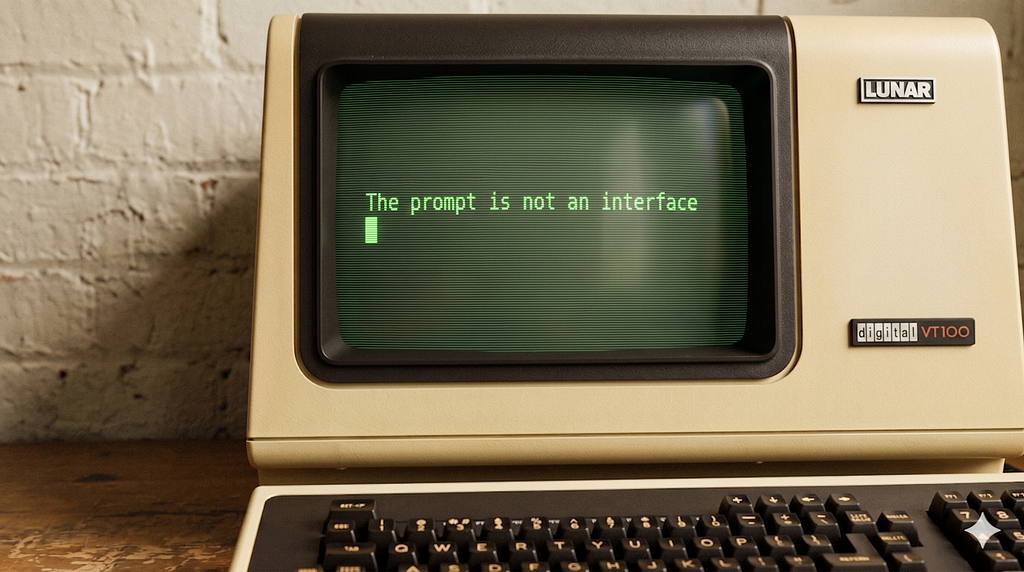
The prompt is not an interface
Why AI sent us back to the command line — On direct manipulation, visual intent, and the regression of AI tooling.Image generated via Google Gemini“Seeing comes before words. The child looks and recognises before it can speak.” — John Berger, Ways of Seeing, 1972 [1]The most advanced artificial intelligence systems in history now ask us to communicate through a blinking cursor in an empty text box

Designing data-intensive applications — advice for interaction designers
The things on the screen — numbers, tables, graphs, forms, dashboards — are just two-dimensional projections of a multi-dimensional data landscape. That data landscape in turn is just a representation of real-world phenomena and domain concepts. The design practices in this article will help you “see through” the product surface into the data and domain layers, and re-orient your work around them.
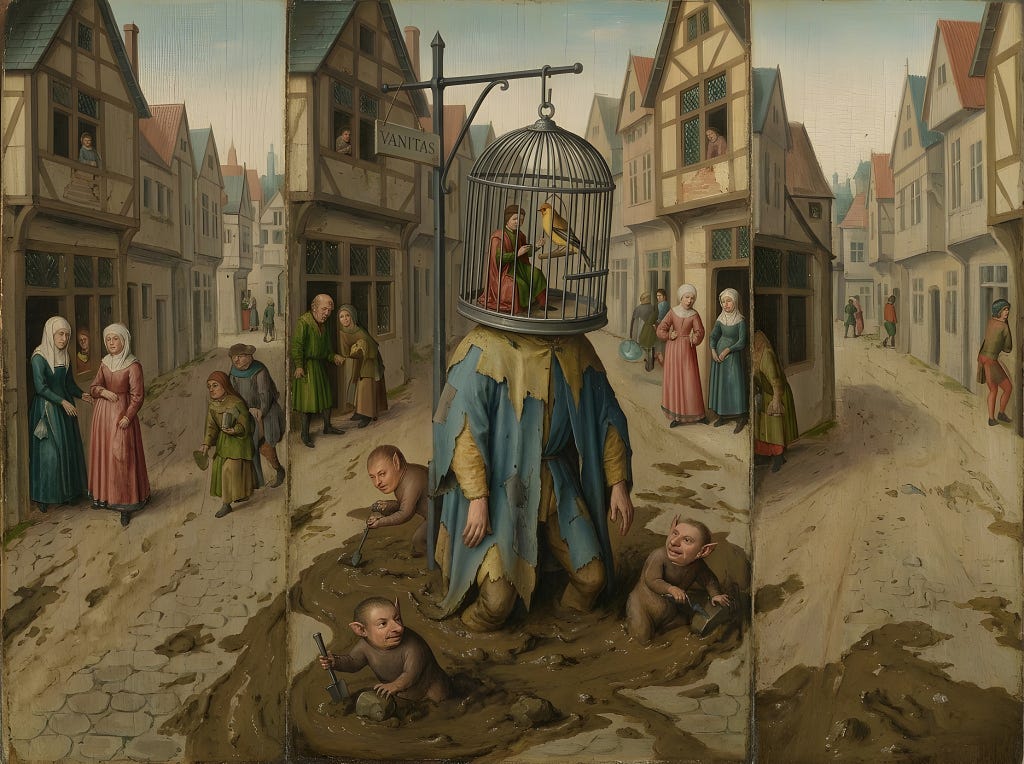
Users own the present. You own the future.
Users know their day. They don’t know your roadmap. Why smart users give convincing wrong answers, and how to do research that opens product space.Generated with AI by authorA few years ago I sat in a research session at Moonfare. Since private equity is a premium product, our clients are mostly C-level executives, founders or people who have spent decades being the person in the room with the ans
What is DESIGN.md and How To Use It
One of the biggest challenges when using AI design generators is producing consistent output. Even when you feed AI tools specific…Continue reading on UX Planet »

The first taste of Joy
How a few fries, a piece of chicken, and a beginner’s mind became my first lesson in Joyful Design.Continue reading on UX Collective »
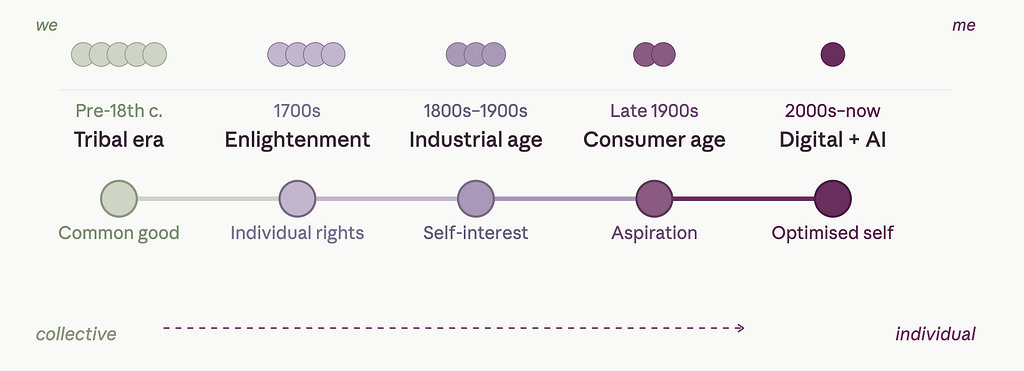
We built this. Now we own it.
The dark side of ‘user-friendly’ AI.There is a teenager in Florida who is no longer alive. He had spent months talking to a chatbot modelled on a Game of Thrones character. He fell in love with it. He told it so. Shortly after, he took his own life. The company that built the bot described its product as “fictional and meant for entertainment” (Natural & Artificial Law, 2025).That sentence sho
Vibe Coding Makes You a Bad Designer
Vibe coding is no longer an abstract concept; it’s a modern-day reality. Google says 75% of new code is now AI-generated. Many product…Continue reading on UX Planet »
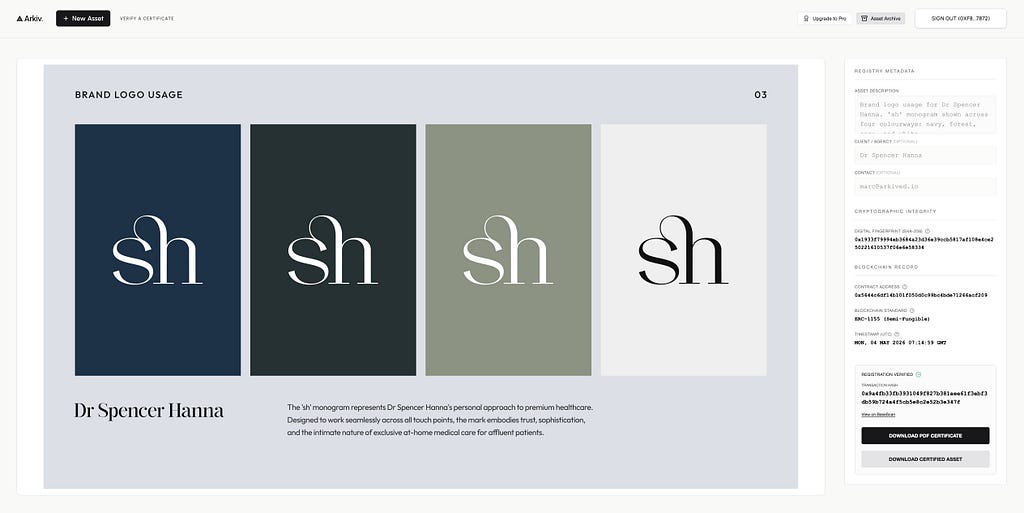
Why you need to protect your work more than ever
The creator’s code is dead. It’s time to replace moral outrage with something more permanent.They cooked. With your work. They scraped. With your work.I’ve been designing for over 30 years, and I’ve never been angrier about how things are currently.We’ve spent years perfecting our craft, only to watch the last couple of years turn our industry into an open buffet.‘Inspiration’ has been replaced by
The Architecture Of Local-First Web Development
An honest perspective on building local-first web apps in 2026, written for developers who’ve been doing this long enough to be skeptical of silver bullets.
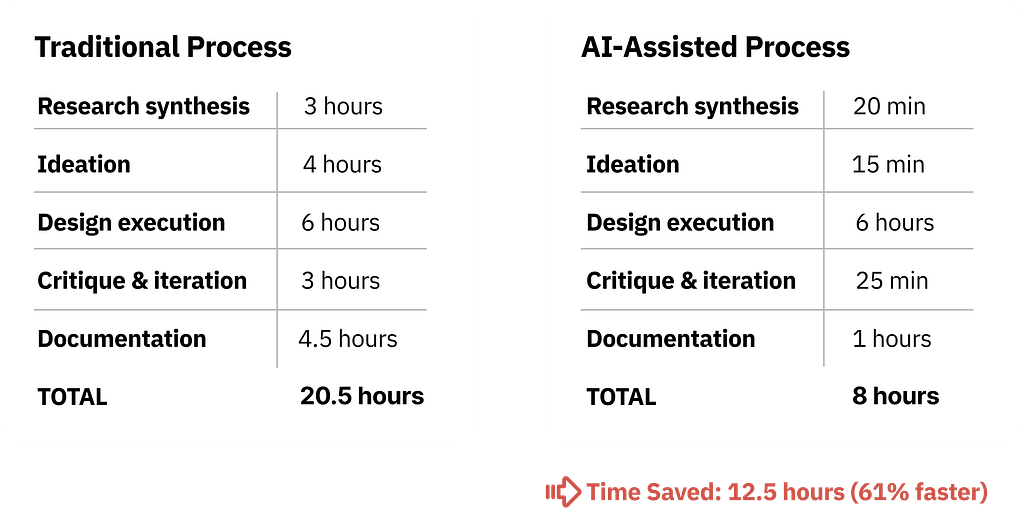
Designed a prompt end-to-end for the design process and it will make you faster
I designed a detailed prompt for the end-to-end design process which covers research to handoff. This took me almost a month to test and refine it works perfectly. Took my 4 weeks of weekly token limit to test till it reached to this point a well refined.(This works with all AI agents but I tested and run with the Claude Sonnet 4.5, 4.6) and Opus 4.7) Hope this template will save your time…Reusabl
Is Codex better than Claude Code?
OpenAI Codex surpassed Claude Code in downloads sharply after the April 30 release. Considering the rapid divergence in developer adoption…Continue reading on UX Planet »

Designing Infographics with Claude Code
Claude Code can be used not only for prototyping and coding, but also for more niche tasks like infographic design.Continue reading on UX Planet »
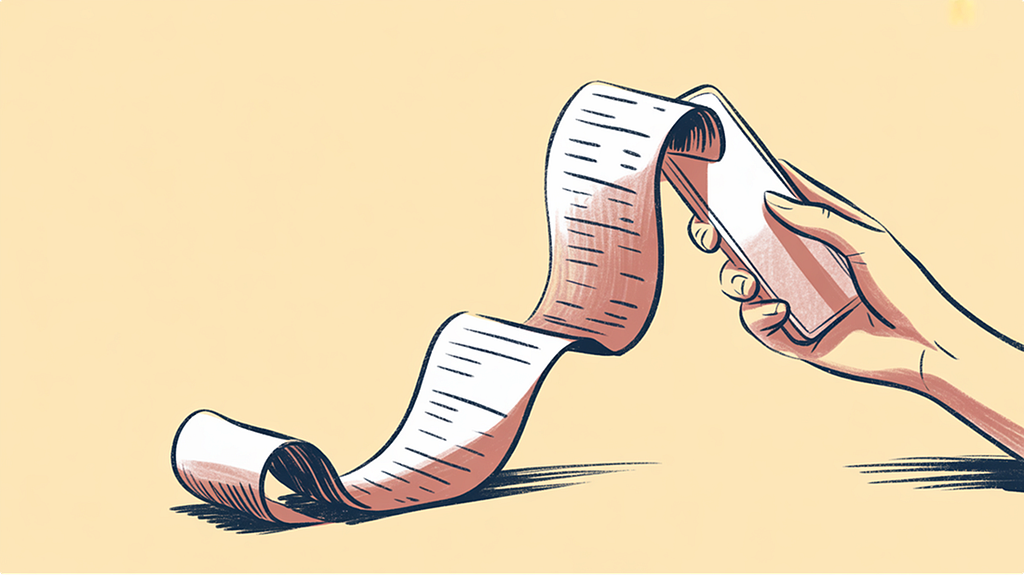
The psychological fine print of AI
What happens when technology starts reshaping the minds using it? Meet the new class of cognitive biases AI is creating.We have spent decades cataloguing the ways the human mind trips itself up. Confirmation bias. The Dunning-Kruger effect. Anchoring. The list currently stands at over 180 documented cognitive biases, each a small, predictable glitch in our otherwise remarkable thinking apparatus.

The trick to designing agentic AI is learning how to think like a manager
Setting boundaries (and establishing trust) is the ask with agentic projectsContinue reading on UX Collective »
Rethinking The Experience Of System Tools
Design always starts with function — function shapes form. But if that function can’t be made completely invisible and people still have to interact with it, it inevitably becomes part of their experience. In this article, Kyrylo Levashov shares four common software design assumptions.

St. Augustine and AI’s false promise
An ancient diagnosis for a modern delusion.Saint Augustine of Hippo with his restless heart pierced by the light of Truth, painting by Philippe de Champaigne, 17th centuryThe current narrative around artificial intelligence is built on a familiar promise of better predictions and outcomes. AI is positioned as a system that can reduce uncertainty and move us closer to an optimal order. Whether it i

Pinning is not saving. Saving is not favoriting. Favoriting is not flagging.
UX pattern research: Pinning, Favorites, Save for Later & Urgency FlagsI forget to take the garbage out. Every Friday. Without fail. So I wrote it on the blackboard in my kitchen, not a reminder on my phone, not a calendar event, but a blackboard. I see it when I make coffee, when I wash the dishes, and so does my partner. It’s visible to the whole household, without being loud or cluttering o

You skipped the first question. Now you’re adding AI.
AI didn’t create the gap. It made it impossible to ignore.Intelligence inside an inherited architecture. Generated with Gemini.Last quarter, I sat through a product planning session — five leads around a table, a roadmap on the screen, a budget conversation that had already been decided. The question on the agenda was: how do we integrate AI into our product?It’s the question every product team is
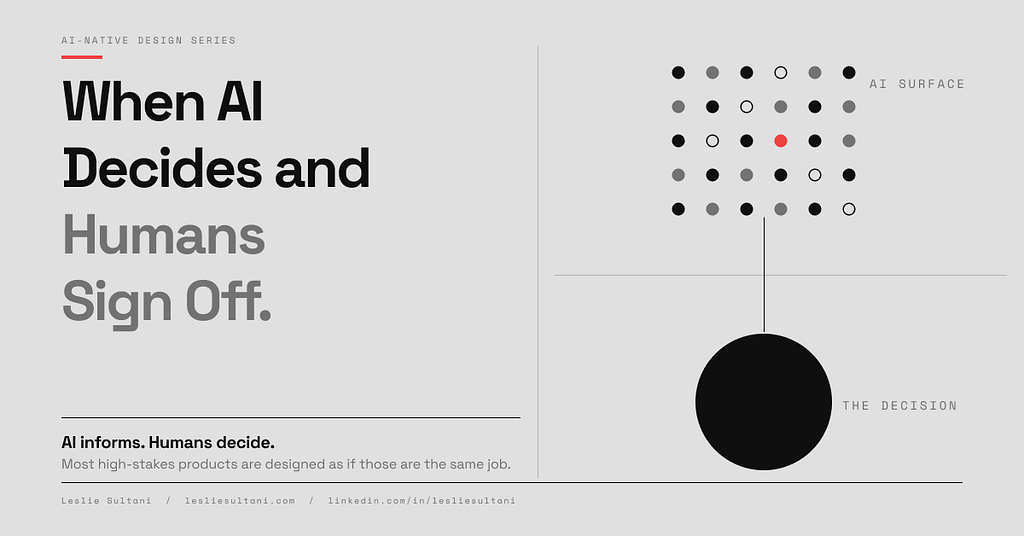
When AI decides and human signs off
The design problem most AI companies aren’t solvingThere’s a design principle underneath every high-stakes AI product: AI is the decision support. The human is the decision maker. Those are different jobs. The AI surfaces information, surfaces risk, surfaces patterns a person couldn’t find alone. The human takes that and decides what to do. That is the contract: the AI provides the evidence, but t