
Error Handling in Go: Stop Panicking, Start Wrapping
Hello, I'm Maneshwar. I'm building git-lrc, a Micro AI code reviewer that runs on every commit. It is free, unlimited, and source-available on Github. Star Us to help devs discover the project. Do give it a try and share your feedback for improving the product.
So you wrote your first Go program. It compiled. You felt powerful. Then you saw this:
file, err := os.Open("dreams.tx

Your AI Doesn’t Know What “Revenue” Means. That’s a Bigger Problem Than You Think.
Here is a scenario that plays out constantly in enterprise software teams. A product manager asks the company’s AI assistant: “Who are our top customers this quarter?” The system returns a clean, ranked list. It looks right. Everyone moves on. Except the product group defines “top” by engagement. Finance defines it by net revenue. Sales … continue reading
The post Your AI Doesn’t Know What “Reven
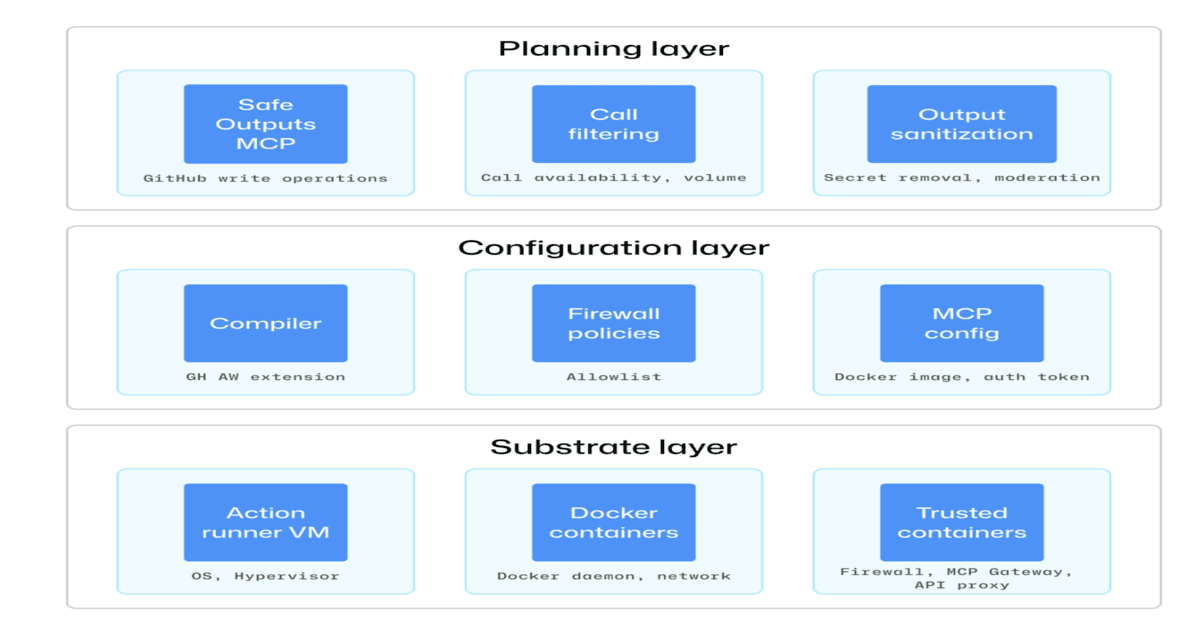
How GitHub Is Securing Agentic Workflows in Modern CI CD Systems
GitHub detailed a defense-in-depth security architecture for agentic workflows in CI/CD pipelines, focusing on isolation, constrained execution, and auditability. The design aims to safely integrate autonomous AI agents while mitigating risks like prompt injection, privilege escalation, and unintended actions, using sandboxed environments, restricted permissions, and full execution traceability. B

Presentation: Leadership in AI-Assisted Engineering
Justin Reock discusses the reality of AI’s impact on engineering, moving past anecdotes to hard data from DORA and DX research. He explains the "GenAI Divide" - where 95% of pilots fail - and shares how leaders can use the SPACE and Core 4 frameworks to measure true ROI. He explains how to balance speed with quality, reduce developer fear, and apply agentic solutions across the entire

Cloudflare Launches “Artifacts” Beta, Introducing Git-Like Versioning for AI Agents
Cloudflare has announced the beta release of Artifacts, a new system designed to bring Git-style version control to AI agents, enabling developers to track, manage, and evolve agent-generated outputs with the same rigor as traditional code. By Craig Risi

How Gemma 4 Changed the Economics of Local AI
This is a submission for the Gemma 4 Challenge: Write About Gemma 4
Stop Defaulting to the Biggest Model: A Developer's Guide to Right-Sizing Gemma 4
The most powerful local AI model isn't the one with the most parameters. It's the one still running when you actually need it.
Most developers waste local AI performance before they type a single prompt.
The mis

I Built My Mom an AI Recipe Helper for Mother's Day
A project about a fridge, Strands agents & trying to keep up with Mom's seasons.
My Mom's Problem
My mom has a drawer full of recipes. Yes! Not a folder.... an actual drawer. Torn pages from magazines, things written on the back of envelopes and binders that've been around longer than I have. Whenever she's looking for dinner ideas she pulls something out, sighs
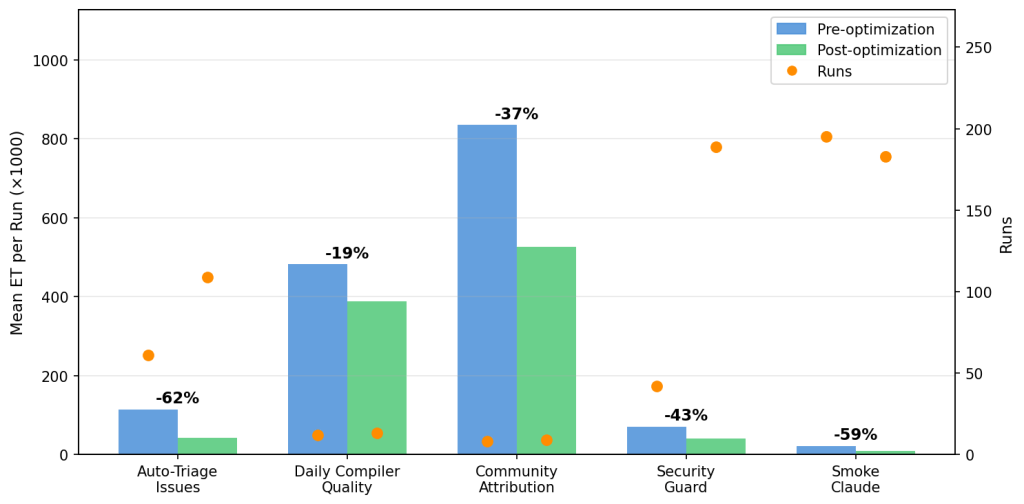
Improving token efficiency in GitHub Agentic Workflows
Agentic workflows that run on every pull request can quietly accumulate large API bills. Here's how we instrumented our own production workflows, found the inefficiencies, and built agents to fix them.
The post Improving token efficiency in GitHub Agentic Workflows appeared first on The GitHub Blog.

Documents are records waiting to exist
Humans are remarkably good at seeing structure.
Show someone a folder containing:
receipts
inspection reports
contracts
photos of vehicles
resumes
…and within seconds they understand the shape of the data.
A receipt has:
a merchant
a total
a date
A vehicle photo has:
a brand
a model
a color
An inspection report has:
findings
categories
pass/fail states
The structure is obvious.

Microsoft Fabric Data Agent: Ask Your Data Questions in Plain English
If you've ever watched a business analyst wait three days for a data team to answer a simple question like "What were our top 10 products by revenue last quarter?" — you know the pain. That lag between curiosity and insight is where decisions go to die.
Microsoft's Fabric Data Agent (currently in preview) is built to close that gap. It lets anyone in your organization ask quest
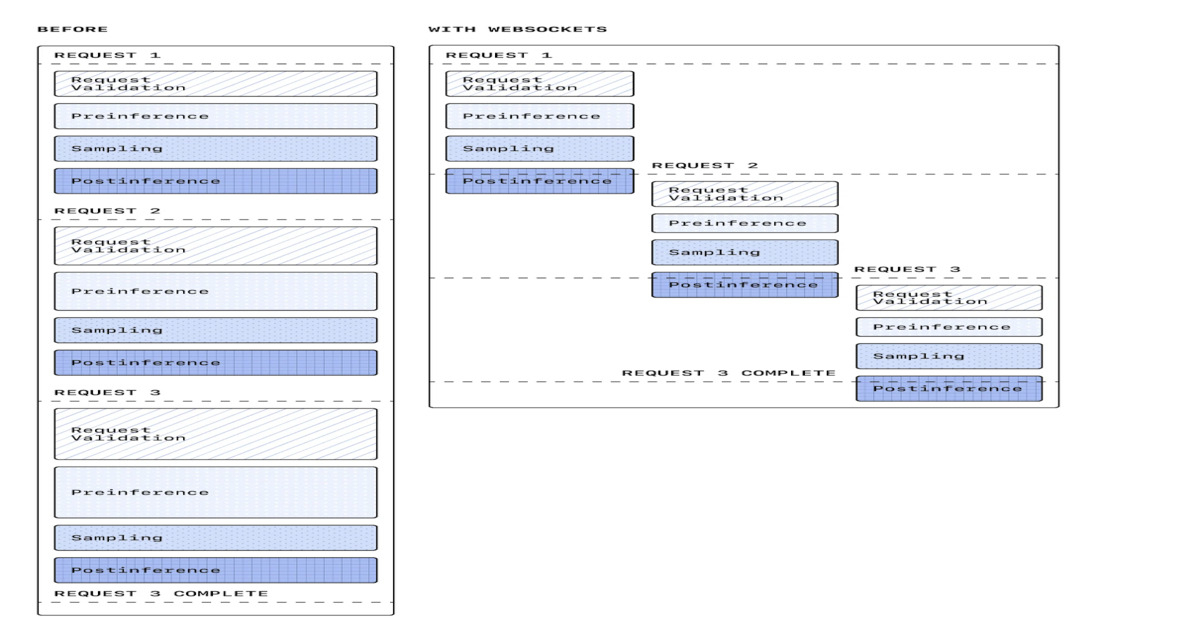
OpenAI Introduces Websocket-Based Execution Mode to Reduce Latency in Agentic Workflows
OpenAI introduces a WebSocket-based execution mode for its Responses API to improve agentic workflow performance in coding agents and real-time AI systems. The update reduces latency by up to 40 percent by replacing HTTP request-response cycles with persistent connections, improving streaming, tool execution, and multi-step orchestration in production-scale AI systems. By Leela Kumili
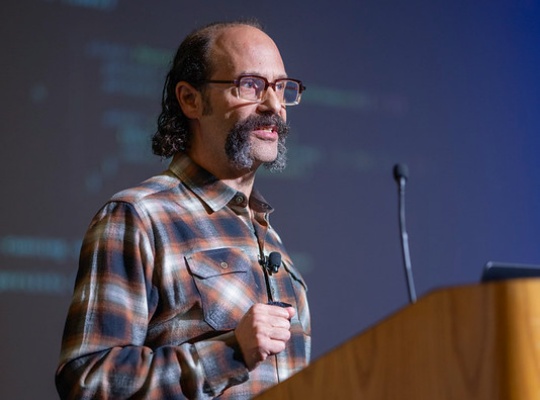
Presentation: Engineering at AI Speed: Lessons from the First Agentically Accelerated Software Project
Adam Wolff discusses the evolution of Claude Code, explaining how AI shifts the SDLC bottleneck from implementation to architectural decision-making. He shares three "war stories" to show why dogfooding and rapid unshipping are vital. He explains that when coding costs drop to zero, the speed of learning becomes the only competitive advantage. By Adam Wolff

Applying Best Simple System for Now for Software Design
Choosing between building up technical debt and missing delivery deadlines is a false dichotomy, Daniel Terhorst-North argued in his talk Best Simple System for Now. Programmers love to generalize rather than solve the immediate problem at hand, which can make future changes difficult. Instead, we need to build the skills and instincts for keeping things simple. By Ben Linders

Google Announces GKE Agent Sandbox and Hypercluster at Next '26, Positioning Kubernetes as AI Agent
Google announced GKE Agent Sandbox and hypercluster at Cloud Next '26. Agent Sandbox uses gVisor kernel isolation for secure agent code execution at 300 sandboxes per second, built as an open-source Kubernetes SIG Apps subproject. It is currently the only native agent sandbox among the three major hyperscalers. Hypercluster manages a million chips from a single control plane. By Steef-Jan Wig

Leading Open Source Author Calls for Verification over Trust in Software Supply Chains
In a blog post published in March 2026, Daniel Stenberg, creator and lead developer of curl, makes the case that the software industry's default position of trusting well-known components is no longer adequate. Stenberg argues that users and organisations should actively verify the software they consume, and he uses curl's own practices as a concrete example of how that can be done. By M
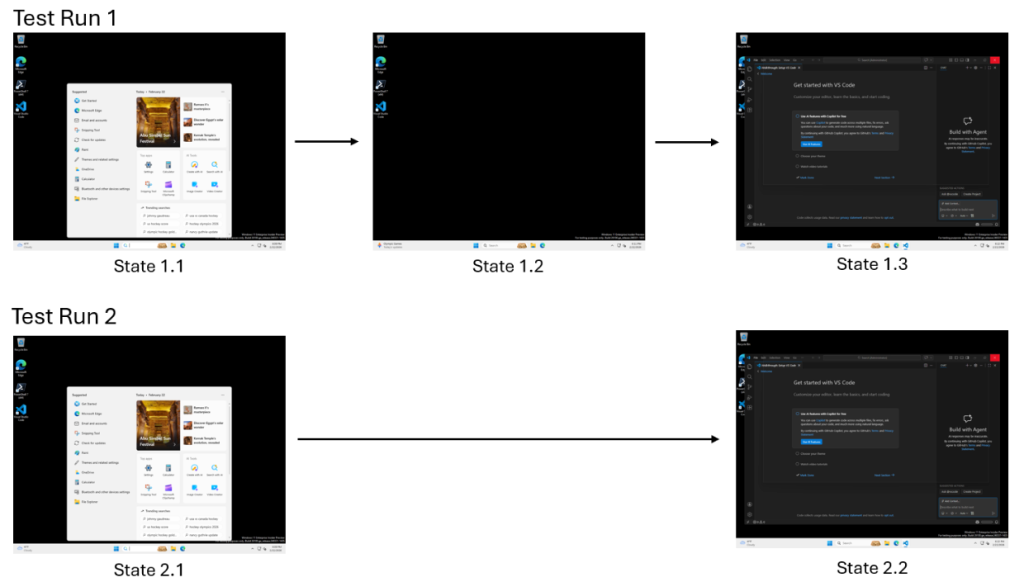
Validating agentic behavior when “correct” isn’t deterministic
How to build the “Trust Layer” for Github Copilot Coding Agents without brittle scripts or black-box judgements by using dominatory analysis.
The post Validating agentic behavior when “correct” isn’t deterministic appeared first on The GitHub Blog.

Understanding Decoder-Only Transformers Part 2: Decoder-Only vs Regular Transformers
In this article, we will look at the differences between a decoder-only transformer and a standard (encoder–decoder) transformer.
How Decoder-Only Transformers Work
A decoder-only transformer uses the same components to process the input prompt and to generate the output.
It relies on masked self-attention, which considers only the current word and the words that came before it.
Ma
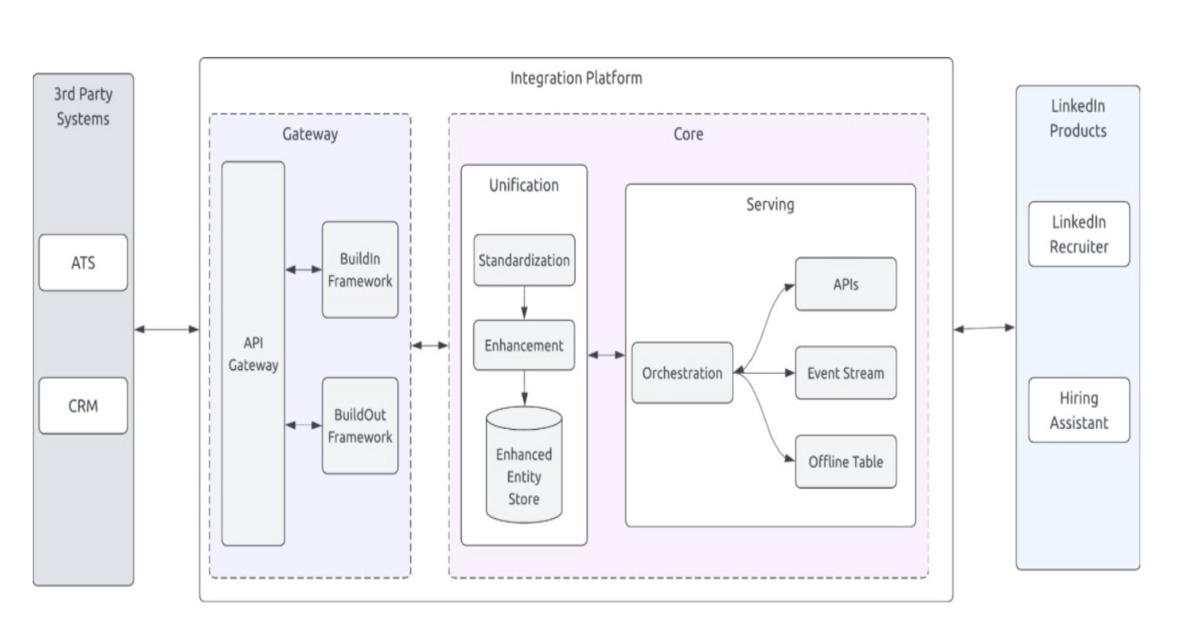
LinkedIn Consolidates Hiring Data Pipelines to Power AI Driven Talent Systems
LinkedIn introduced a unified integrations platform to standardize and reconcile hiring data across systems. The platform reduces onboarding time by 72%, improves data consistency and completeness, and enables scalable AI-driven hiring features through standardized schemas, orchestration workflows, and centralized data processing. By Leela Kumili

Presentation: AI-First Software Delivery: Balancing Innovation with Proven Practices
Wes Reisz discusses the shift toward AI-first software delivery, emphasizing that agentic workflows are not one-size-fits-all. He explains a strategic two-by-two model based on code longevity and automated verification to decide between supervised and unsupervised agents. He shares the RIPER-5 framework - Research, Innovate, Plan, Execute, Review - to amplify engineering discipline. By Wes Reisz

Attacker Bought 30 WordPress Plugins on Flippa and Backdoored All of Them
An attacker purchased 30+ WordPress plugins on Flippa for six figures, planted a PHP deserialization backdoor in the first commit, and waited eight months before activating it across 400,000 installations. The attack used Ethereum smart contracts to resolve C2. WordPress.org has no mechanism for reviewing plugin ownership transfers, a gap that npm and PyPI addressed years ago. By Steef-Jan Wiggers